
This wonderfully flavourful, crunchy, and colourful salad can be easily adapted to suit your purpose, whether it be as a salad or as a main summertime dish.
The salad is said to date back to the late 1800s when it was created by Oscar Tschirky, the head chef of the infamous Waldorf hotel at the time.
The original Waldorf salad only consisted of red apples, celery, and mayonnaise; the chopped walnuts were added later, alongside other variations you will see if you look up a few different recipes. Some cooks add a variety of some of these extras: red grapes, red onion, orange segments, chives, pancetta, crumbled blue cheese, or goats’ cheese, asparagus and even a poached egg! I sometimes add poached chicken to make it more substantial meal.
Today, we think of the Waldorf salad as an American classic. It combines apples, grapes, celery, and toasted walnuts in a mayonnaise dressing; the perfect mix of sweetness and nuttiness with just enough crunch! Served in cos lettuce cups or the cos decorating the salad around the salad bowl.
I also vary the fruits in the salad, depending on my whim and the fruits in season. In autumn I love to add a firm, crunchy persimmon, with the new season’s apples and walnuts. Here I also have some very finely sliced spring onions and avocado, both of which I love for the flavour, colour and texture. In summertime, if I want to use the salad as a more substantial main course, I add a poached chicken! So, I guess, I have strayed quite a bit from the classic original!
Serves 4 – 6
Ingredients:
Waldorf salad
1 x 1.4k fresh chicken
1 Pink Lady apples, do not peel, just core and cut into approx. 1 cm dice
1 cup thinly sliced celery
¾ cup finely sliced spring onions, including green
¾ cup each of red and green grapes, washed and halved
¾ cup toasted chopped walnuts
2 handfuls of hand torn, mixed salad greens, cos lettuce, red sorrel, rocket.
1 avocado, cut into approx. 1.5cm dice
Sea salt flakes and freshly cracked pepper
Waldorf Salad Mayonnaise Dressing
3 tbsp my mayonnaise
40ml my vinaigrette
2 tbsp Greek pot set, or sour cream,
2 tbsp cream
1 tsp lemon juice
Sea salt and freshly cracked pepper to taste
Recipes for my mayonnaise and vinaigrette are in the collection and at the end of this recipe.
Method:
The secret to these simple recipes is to take care in the cutting of the ingredients to make them as attractive as possible. So, practice your knife handling skills and cut and dice these delicious, crunchy, colourful ingredients attractively.
To poach the chicken: see my recipe for perfectly poached chicken, below. Remove the skin from the chicken and cut or tear the chicken from the bones. Cut or tear into large bite sized pieces and set aside in the refrigerator until ready to assemble the salad.
Prepare the apples, celery, spring onions and grapes; set aside. Dry toast the walnuts either in a 170℃ oven for 10 minutes or so; or toss in a dry frying pan until just golden and you can smell the walnut aroma, about 5 minutes. Do not allow the walnuts to burn. Set aside and add to the salad just before serving so they remain crunchy.
Just before serving: prepare avocado dice and add to the salad with the walnuts.
Wash and dry the salad leaves, tear into bite sized pieces. Set aside, ready to assemble the salad.
For the salad dressing: whisk together the salad dressing ingredients until smooth, taste and season; set aside. When ready to serve, pour about 40ml of dressing over the salad ingredients. Add the mayonnaise.
With your hands, gently toss to mix all the ingredients until the mixture is just coated in the dressings. Taste and adjust the seasoning as necessary; and if you wish add a little more mayonnaise and salad vinaigrette.
Refrigerate until ready to serve.
To serve: add the walnuts and avocado and gently mix again. Carefully spoon the salad onto a large serving platter or into a large shallow bowel, scatter the top with a few extra crunchy, golden walnuts. If you wish, gently toss the salad again to distribute a little of the dressing over the walnuts.
Additional recipes for this salad
Perfectly poached whole chicken
Prepare the court bouillon for the poaching of the chicken: take a large pot, put the whole chicken in and add cold water to cover. Add the vegetables and aromatics as if making chicken stock. 2 chopped onions, two chopped carrots, one chopped leek, two sticks of celery, chopped, a handful of parsley stems, a few sprigs of thyme, 2 bay leaves, 10 peppercorns.
To poach the chicken: bring the pot to a simmer and keep at this ‘lazy bubble’, which is a very gentle simmer for 5 – 10 minutes. Then, turn off the heat and cover. Leave the chicken for 1 hour in broth and then carefully remove your beautifully poached, moist chicken.
This is the perfect way to prepare your chicken for any dish requiring cooked chicken. Plus, you are on the way to making a wonderful stock.
For the ‘stock’ court bouillon: If you don’t have time to continue cooking the stock, pour this ‘stock’ into small, about 500ml, plastic freezer containers; the stock will cool within 2 hours and then place them in the freezer in those same containers. When making your next chicken stock, use this liquid instead of water.
If time permits, continue to make the chicken stock: continue simmering this stock for 2 – 3 hours to reduce the stock and intensify its flavour. When the poached chicken is cool enough to handle, strip the flesh from the bones and add these bones back into the ‘stock’ and continue with the simmering.
Cook’s hint: I always freeze any leftover chicken bones ready for my next stock making.
My mayonnaise
Beautiful home-made mayonnaise enhances everything it touches, with its custardy richness and delicate tang that gives a clean and clear flavour that commercial mayonnaise does not have.
When making this sauce, do remember to take your time and go slowly, drop by drop, at the beginning for the addition of the oils. The whole process takes about 10 minutes, so relax and enjoy it. The skill is in the making of the emulsion, which is the combining of two liquids that don’t like to mix together.
Makes about 300ml
Ingredients
2 egg yolks
1 tsp Dijon mustard
½ tsp salt
¼ tsp white wine or cider vinegar
1½ – 2 tbsp lemon juice
370ml lightly flavoured olive oil
White pepper
1 – 2 tbsp water, if the mayonnaise is too thick or add some more lemon juice to taste
Creating of the mayonnaise emulsion: the skill in the making of mayonnaise is the creation of the emulsion – the combining of two liquids that don’t like to mix together. Mayonnaise is a dense emulsion made up of tiny oil droplets tightly packed together, but not actually touching. The key to a stable emulsion is to keep these tiny oil droplets separate; if they merge the emulsion collapses. That is why emulsions contain emulsifiers to stabilize the mixture; in mayonnaise, the emulsifier is the lecithin in the egg yolks and in the mustard, it is the polysaccharides. These emulsifiers form a thin barrier around each tiny oil droplet so they co-exist without breaking down. Vigorous whisking causes the two ingredients to break into very tiny droplets that are suspended in, and separated, by the other. The oil droplets are surrounded by the emulsifiers to keep them separate and so the emulsion is formed. If the oil droplets merge, the mayonnaise breaks down, separates and become a oily greasy liquid.
Simply, if you add the oils too quickly, without creating the emulsion early in the process, you have a very strong likelihood of the mayonnaise separating or breaking up, and then you have to start again!
Before starting to make the mayonnaise make sure all your ingredients and bowls are at room temperature. If the oil is cold, heat it to tepid.
Use a medium sized, clean and dry, ‘warm’ bowl and rest it on a warm, damp cloth to stop it slipping.
Separate the eggs, reserve the whites for another use or freeze them.
Work egg yolks with your whisk or wooden spoon for 2 minutes until they are thick and sticky. This is the beginning of the formation of the emulsion, the working of the emulsifier, lecithin, in the egg yolks.
Then add the Dijon mustard, the polysaccharides in the mustard are another emulsifier. salt, vinegar and one tablespoon of the lemon juice and beat until very thick, at least 30 seconds. This is an important part of the process as it begins the forming of the emulsion.
Now the eggs are ready for the oil. Wrap a tea towel around the base of your bowl to stop it from moving and very slowly drip the oil in, drop by drop, whisking constantly, until creamy and thick. As the mixture thickens, and you have added about half the oil, you may increase the oil additions to a very thin trickle until it is all added.
Taste, adjust the seasonings and add extra lemon juice or water if needed. Repeat until it is right.
Cook’s hint: consult the full recipe for various options, such as aiöli and how to remedy a separated or broken mayonnaise.
My vinaigrette
This is a well-balanced vinaigrette which I use for most of my green salads. The secret is to use a very good quality vinegar which adds good flavour. You may adjust the ingredient quantities to suit your taste.
Makes 300ml approximately
150ml olive oil
50ml Champagne Chardonnay Ardenne vinegar or another good quality white wine vinegar
2 tsp Dijon mustard
1 tbsp lemon juice
A splash of water, about 1 tablespoon to make the vinaigrette less harsh.
Sea salt and freshly cracked black pepper
To make the dressing: take a medium sized stainless-steel bowl. Add the olive oil, chardonnay vinegar, the Dijon mustard, sea salt and pepper to taste; add the lemon juice. Whisk enthusiastically to create an emulsion. Taste to check the flavour and add more oil or vinegar or lemon juice to suit your taste, if necessary.
Store in a sealed glass salad dressing jar.
-
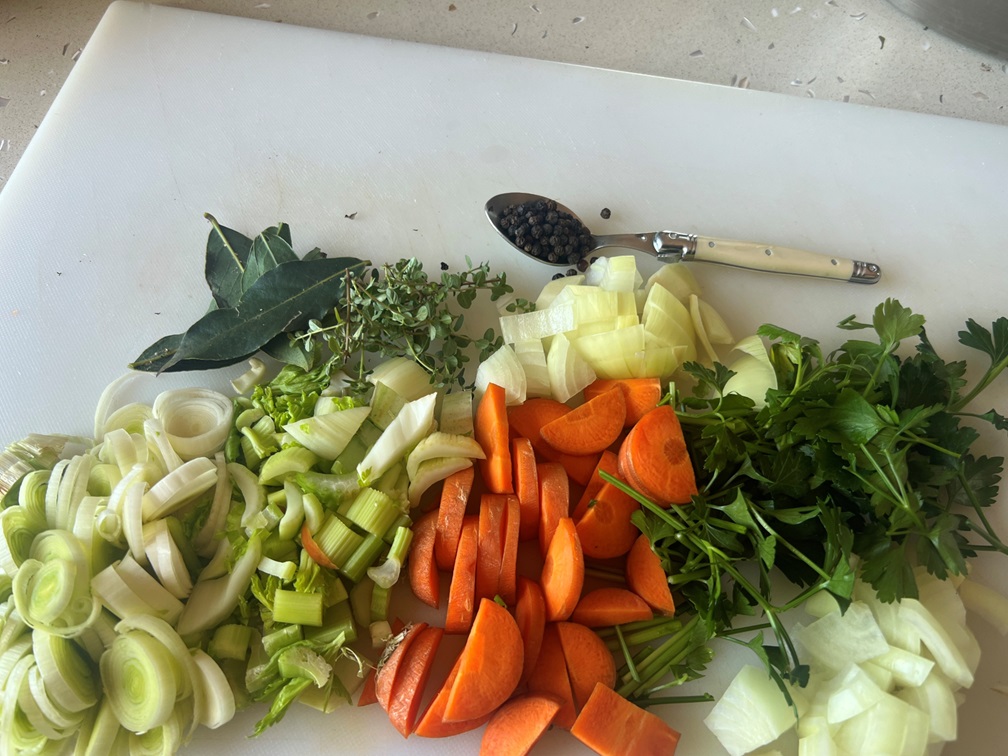
- Vegetables and aromatics
-
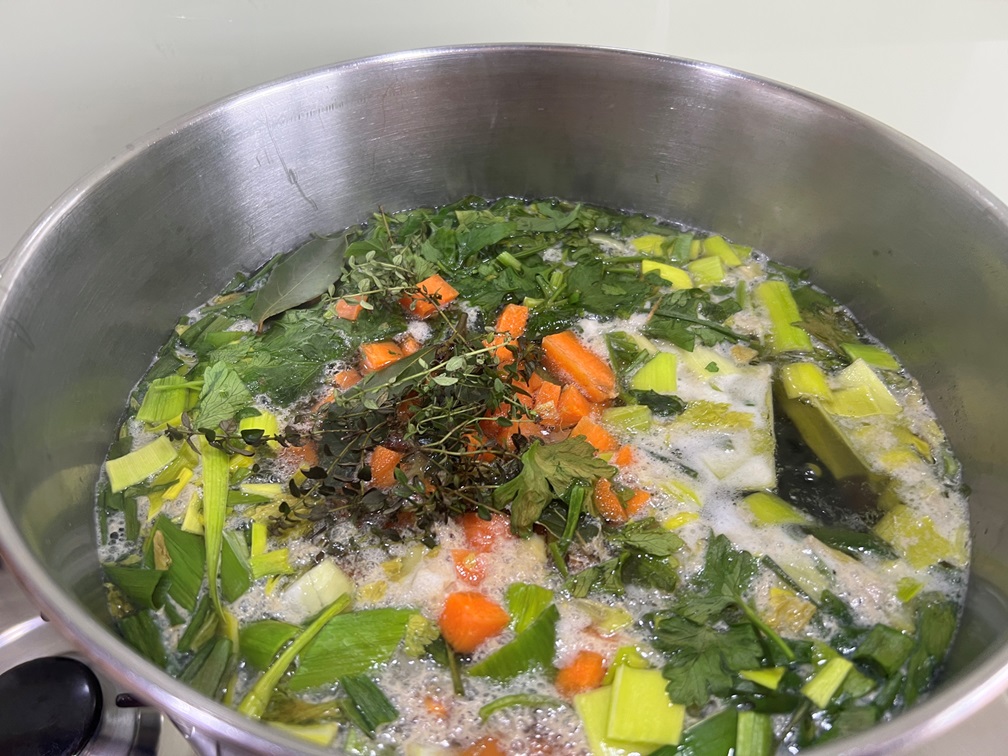
- Lazy bubble for poaching
-
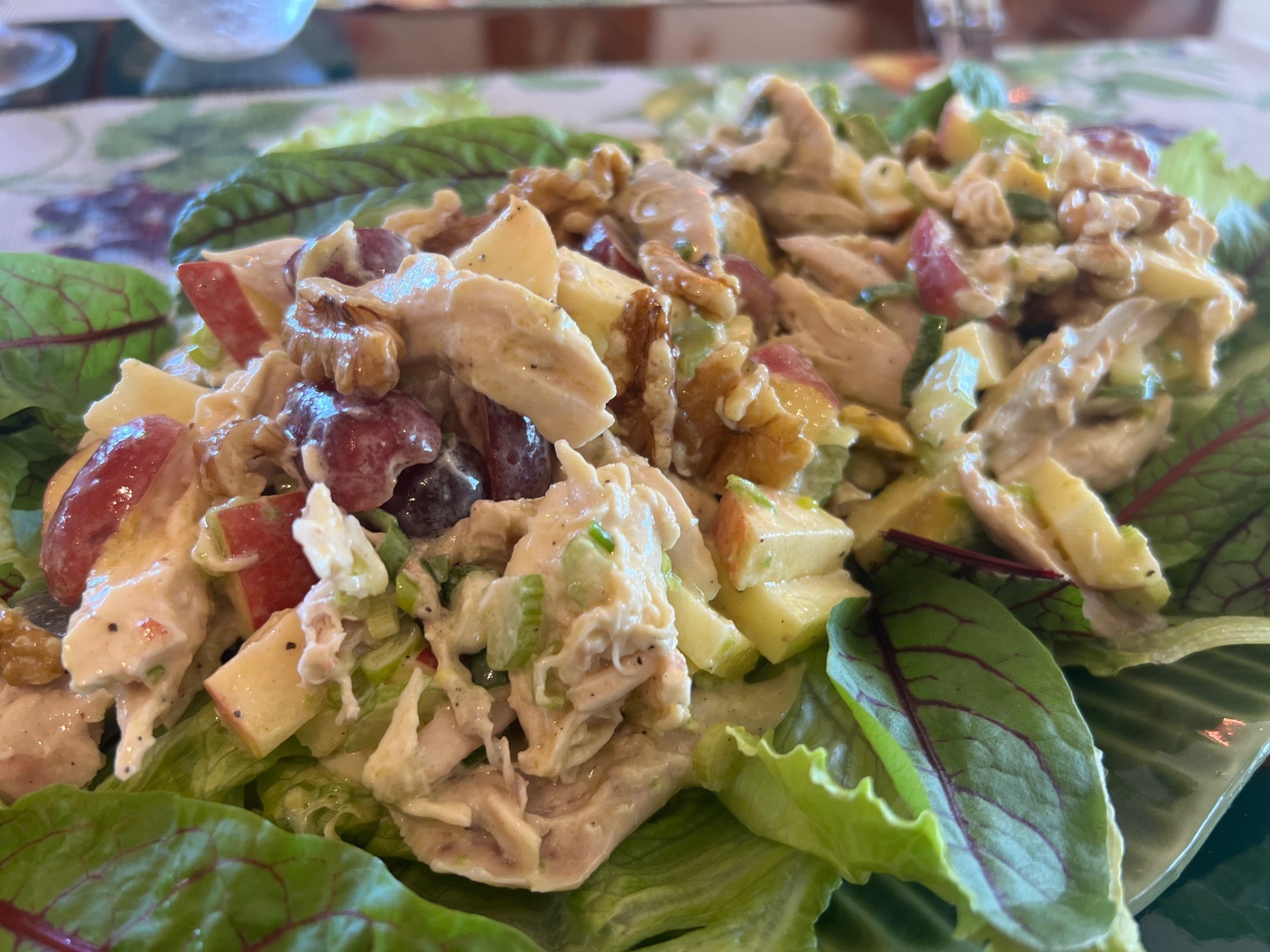
- Waldorf Chicken Salad