This recipe is from Jill Norman’s At Elizabeth David’s Table and originally published in Elizabeth David’s 1960 French Provincial cooking. This terrine is ideal for a starter, served on toast or with a French baguette, also as a light lunch with salad. It is an excellent addition to a party buffet, smorgasbord. I love to serve this on New Year’s Eve as it can be made the day ahead, and it is better after the flavours have developed.
This is the sort of pâté you get in French restaurants under the alternative names of pâté maison or terrine du chef.
Serves 8 – 1o
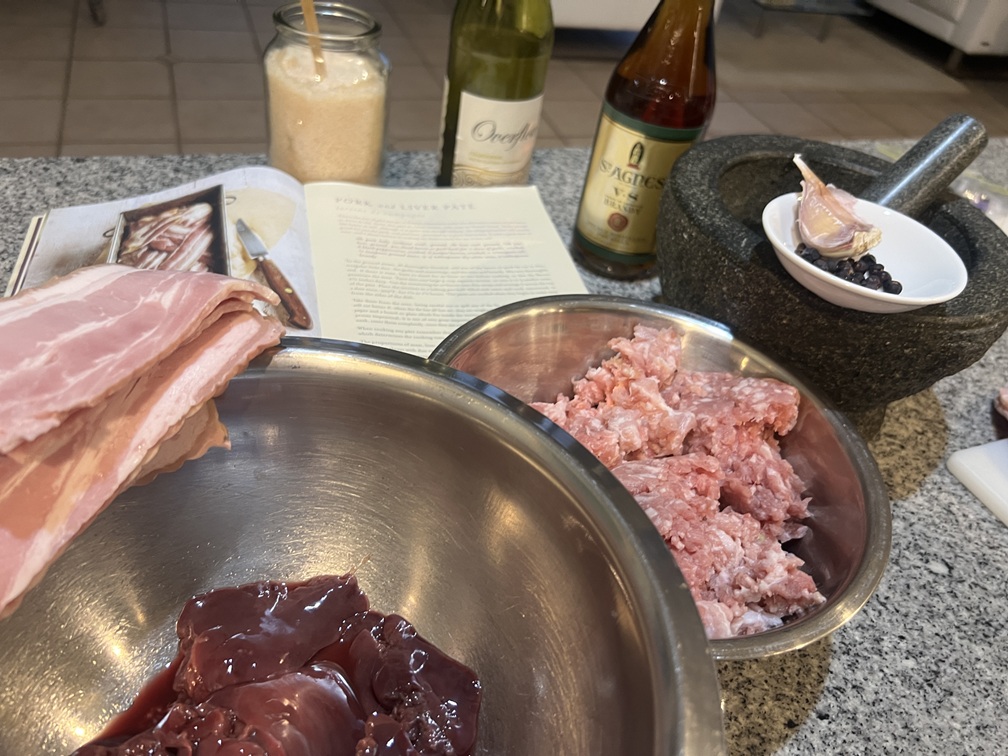
Ingredients:
500g pork belly, minced
500g lean veal, minced
250g pig’s liver, minced, or chicken livers
125g streaky bacon or pork back fat or speck
1 clove of garlic, crushed
6 black peppercorns, crushed
6 juniper berries, crushed
1–2 tsp salt
½ tsp ground mace
3–4 tbsp dry white wine
2 tbsp brandy
Method:
You will need a 1.25-litre capacity terrine, or into 2 or 3 smaller ones, about 5–6cm deep.
Pre-heat the oven to 160℃.
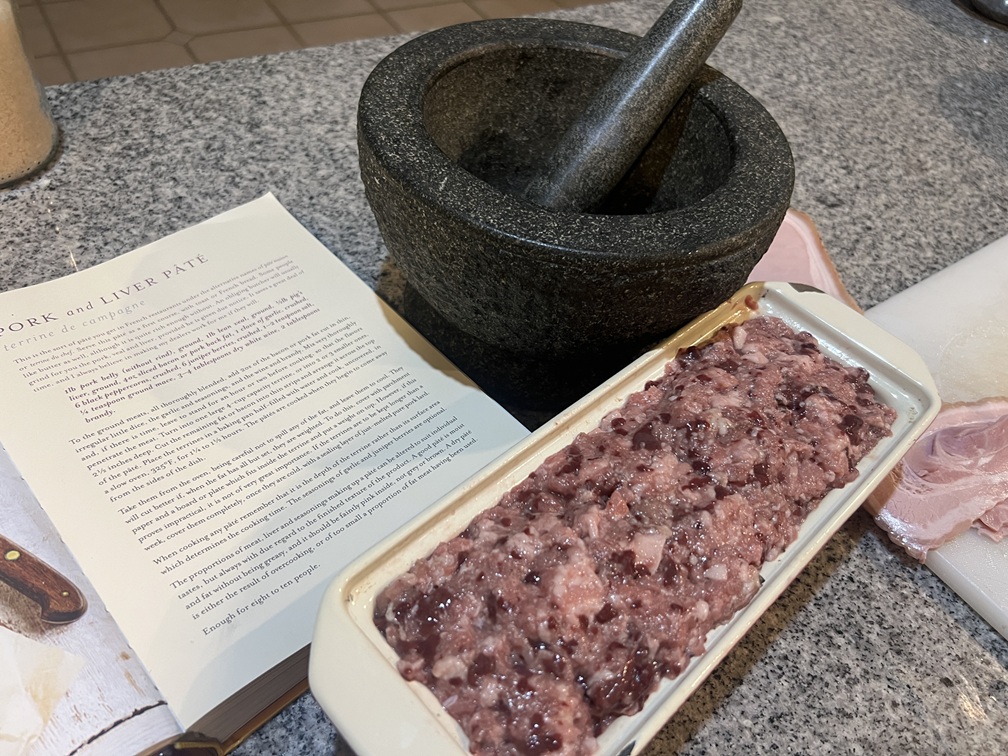
For the minced meats, ensure they are all thoroughly blended. Add 60g of the streaky bacon or pork fat or speck, cut in thin, irregular little dice, the garlic and seasonings, and the wine and brandy. Mix very thoroughly and, if there is time, leave to stand for an hour or two before cooking, so that the flavours penetrate the meat. Turn into your large 1.25-litre capacity terrine, or into 2 or 3 smaller ones, about 5–6cm deep.
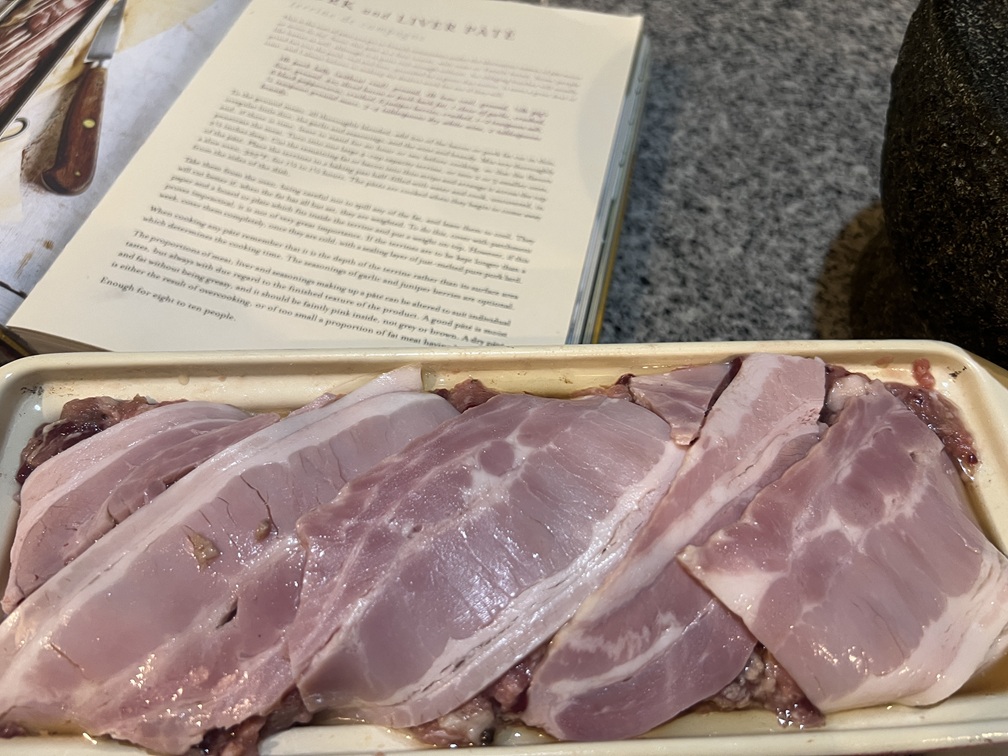
Decorate the top of the terrine: cut the remaining bacon into thin strips and arrange it across the top of the pâté.
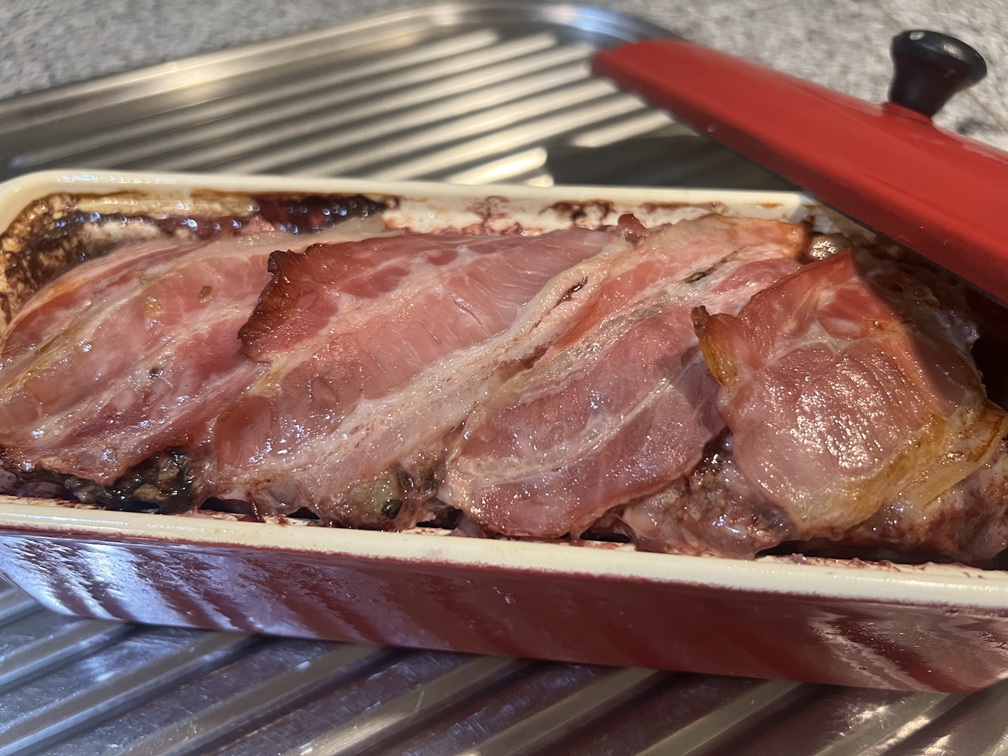
To cook the terrine: place the terrine/s in a baking tray. Fill the baking tray ¾ way up the sides of the terrine with water and cook, uncovered, in the preheated, slow oven, 160°C, and cook for 1¼ to 1¼ hours. The pâtés are cooked when they begin to come away from the sides of the dish and when skewed with a cake skewer, the juices run clear.
Remove carefully from the oven: take them from the oven, being careful not to spill any of the fat, and leave them to cool. They will cut better if, when the fat has all but set, they are weighted. To do this, cover with greaseproof or baking paper, and put a board or plate which fits inside the terrine and put a weight on top. However, if this proves impractical, the terrine will be ok. If the terrines are to be kept longer than a week, cover them completely, once they are cold, with a sealing layer of just-melted pure pork lard.
Cook’s hint: when cooking any pâté remember that it is the depth of the terrine rather than its surface area which determines the cooking time. The seasonings of garlic and juniper berries are optional.
The proportions of meat, liver and seasonings making up a pâté can be altered to suit individual tastes, but always with due regard to the finished texture of the product. A good pâté is moist and fat without being greasy, and it should be faintly pink inside, not grey or brown. A dry pâté is either the result of overcooking, or of too small a proportion of fat meat having been used.